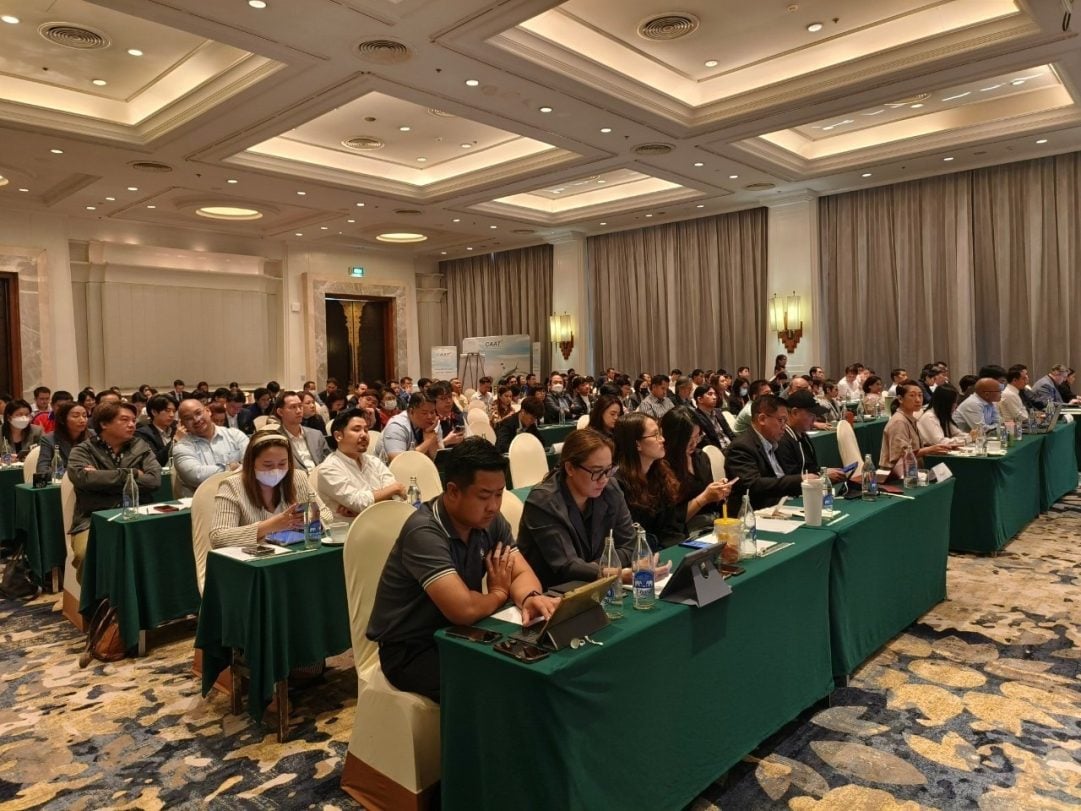
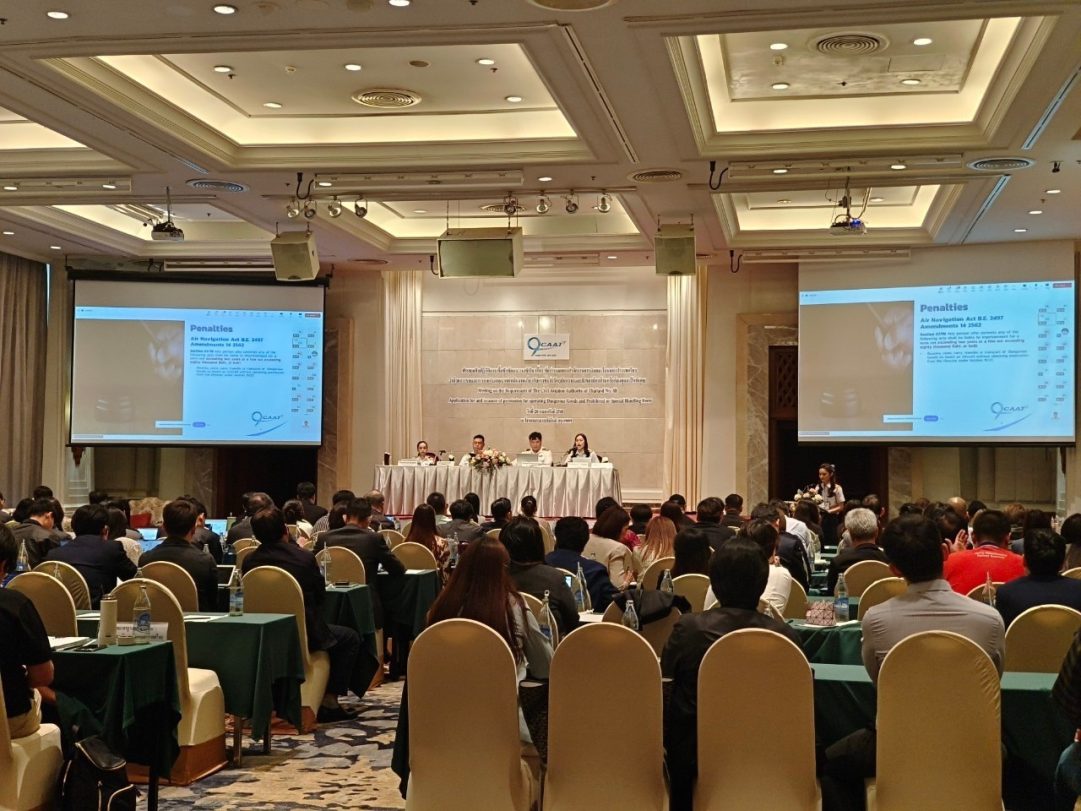
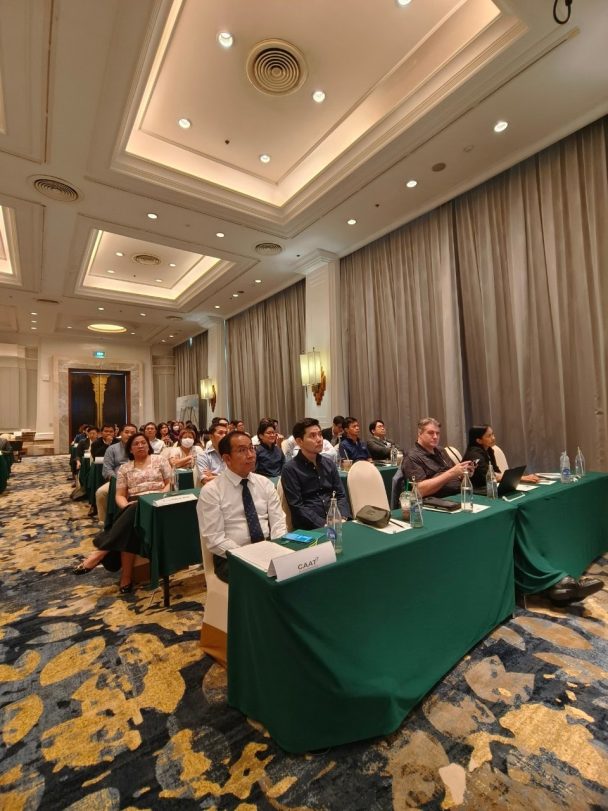
The Dangerous Goods Standards Division, Flight Operations Standards Department, conducted a Workshop for Rehearsing Understanding on the Requirements of the Civil Aviation Authority of Thailand for ‘Application for and Issuance of Permission for Operating Dangerous Goods and Prohibited or Special Handling’ on February 20, 2028, at Rama Garden Hotel Bangkok.
As many of you know, the transportation of dangerous goods is critical to our industry, economy, and society. However, it also presents significant hazards. These regulations are not just a matter of compliance; they are essential for protecting health, safety, property, and the environment.
In response to evolving global standards and increasing safety concerns, the Civil Aviation Authority of Thailand (CAAT) has introduced new regulations to align our practices with international guidelines, particularly those established by the ICAO Technical Instructions (ICAO TI) and the IATA Dangerous Goods Regulations (IATA DGR).
The Civil Aviation Authority of Thailand (CAAT) has recently issued new regulations concerning the transportation of dangerous goods:
• Requirement of The Civil Aviation Authority of Thailand No. 68 Application for and issuance of permission for operating Dangerous Goods and Prohibited or Special Handling Items. and
• Requirement of the Civil Aviation Authority of Thailand No. 73 on the Operations regarding the Transport of Dangerous Goods and Prohibited or Special Handling Items
These regulations are designed to:
1. Enhance Safety Measures: Establish comprehensive oversight for all stakeholders involved in the transport of dangerous goods by air, including air operators, shippers, freight forwarders, handling agents, public aerodrome operators, regulated postal authorities, training service providers, and civil aviation security screening agencies. This ensures a standardized approach that maximizes safety in air transport.
2. Improve Training and Education: Require comprehensive training programs for personnel handling and transporting dangerous goods, fostering a strong culture of safety and regulatory compliance.
3. Streamline Compliance Processes: Implement clearer and more structured procedures for operational processes and individual responsibilities. This will help reduce complexity, enhance operation efficiency and ensure smooth adherence to regulatory standards.
Conclusion
This seminar on new requirements on the transport of dangerous goods by air represent a significant step forward in enhancing safety and compliance in Thailand together, we can ensure that our air transport system remains safe, efficient, and aligned with international standards.
We would like to express our gratitude to all of you to joining with us. As we move forward, let us work together to build a safer future for air transport in Thailand and look forward to sustainable growth.