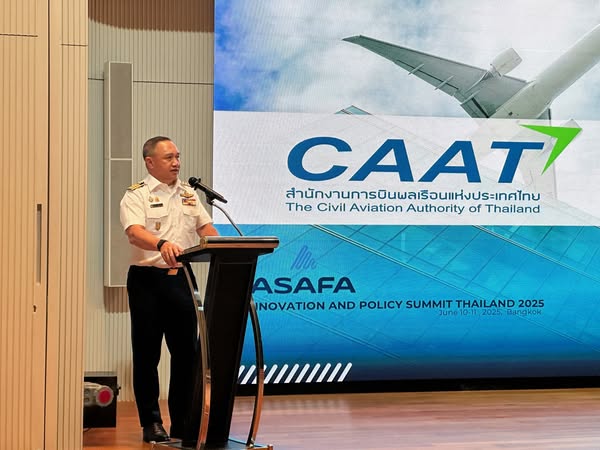
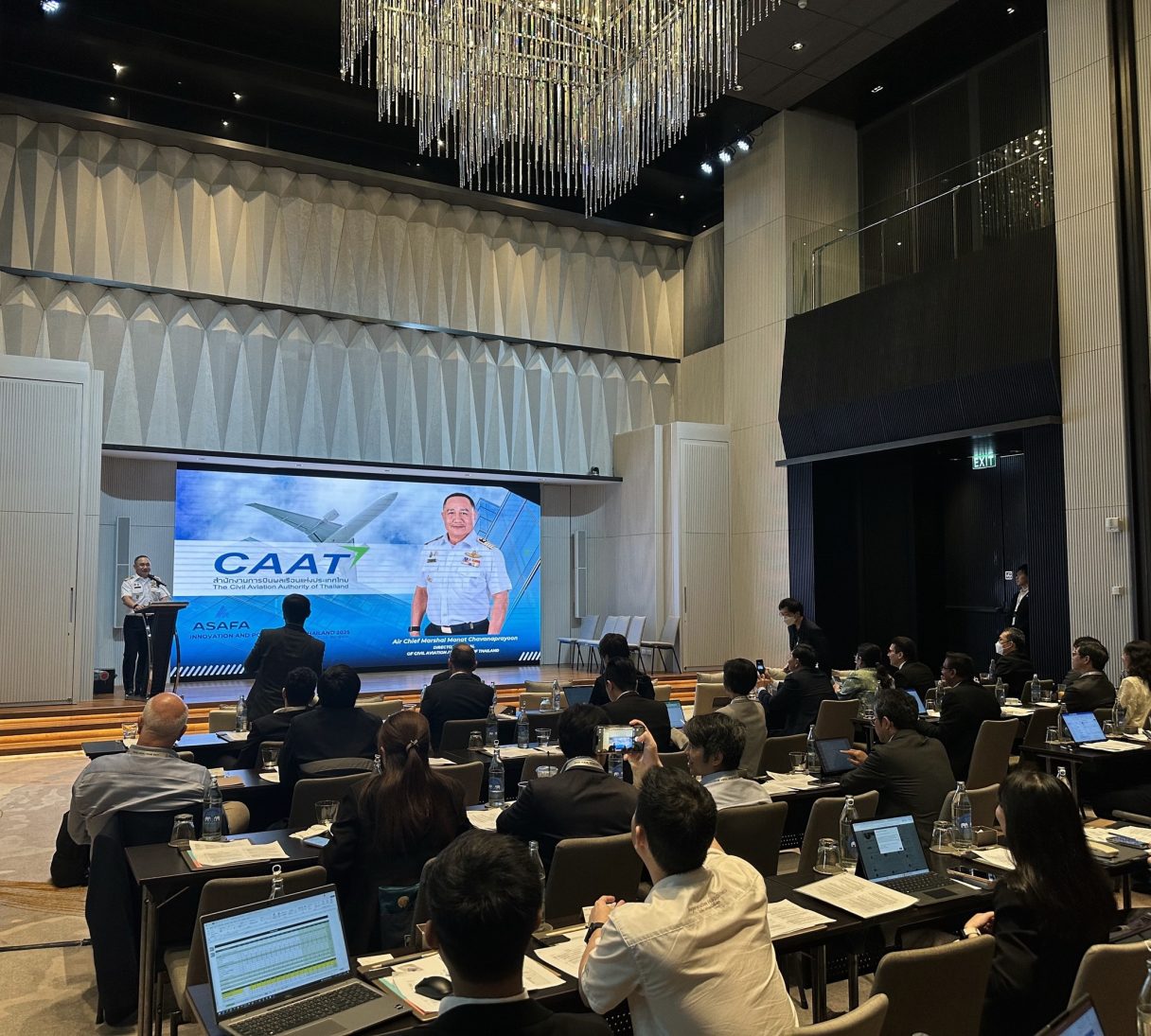
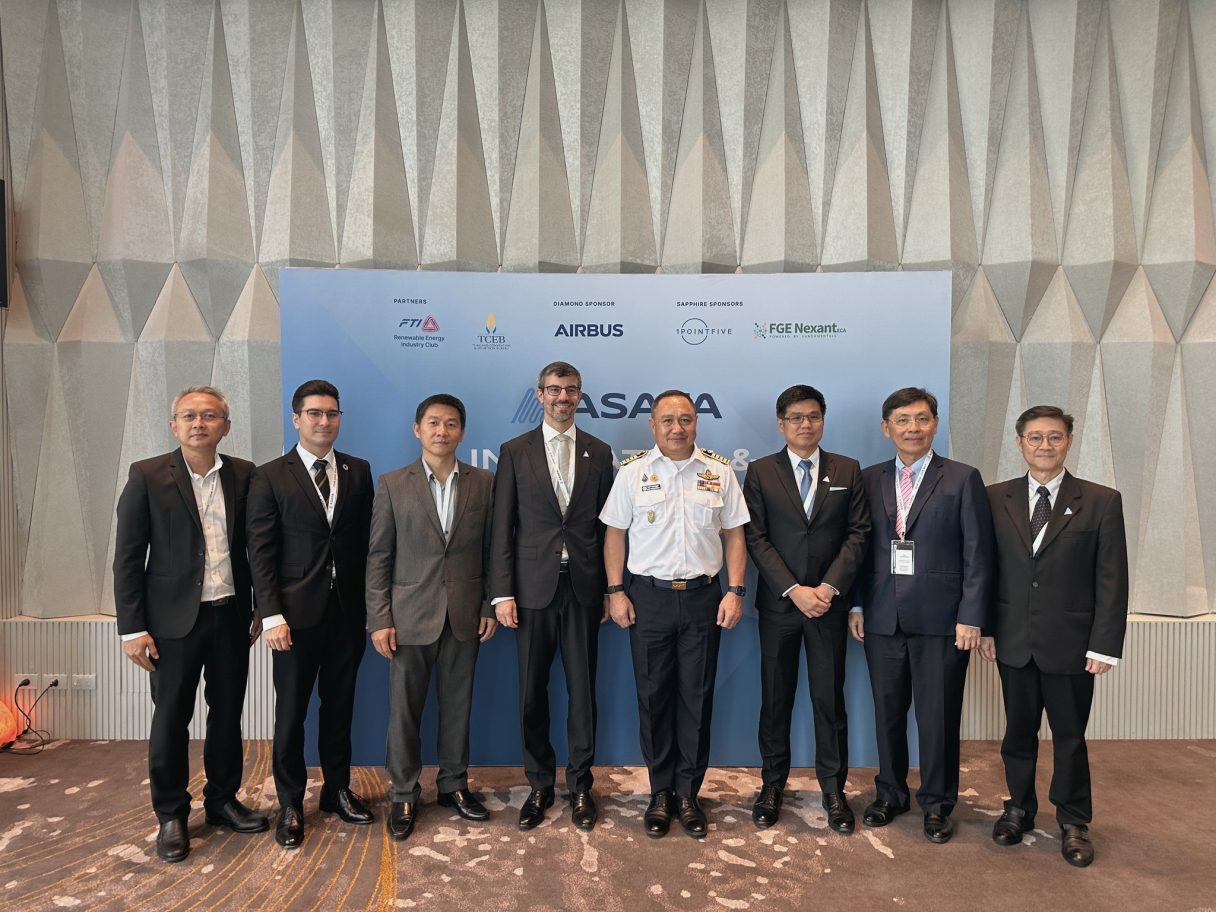
The Civil Aviation Authority of Thailand (CAAT), led by Air Chief Marshal Manat Chavanaprayoon, Director General of CAAT, took on a prominent role at the ASAFA Innovation and Policy Summit (IPS) Thailand 2025, held from 10–11 June 2025 at Le Méridien Bangkok. CAAT reaffirmed its strong commitment to advancing Sustainable Aviation Fuel (SAF) under a regulatory framework that supports the growth of an environmentally responsible aviation industry.
The summit, part of the “ASAFA Summer of SAF Series”, was hosted by the Asia Sustainable Aviation Fuel Association (ASAFA). It serves as a high-level platform for cross-sectoral collaboration, promoting policy dialogue, technology exchange, and investment models to accelerate SAF development across Asia. Thailand was honored as host country, recognized for its abundant biomass resources and strong potential to become a regional leader in clean fuel production and export.
As Thailand’s civil aviation regulator, CAAT emphasized its support for SAF promotion through active participation in policy dialogues. More importantly, CAAT unveiled plans to establish Memorandum of Understanding (MOUs) with Thai airlines to support the commercial adoption of SAF. “CAAT plays a crucial role in shaping SAF policies and fostering collaboration across all sectors to ensure a stable and effective transition toward sustainable aviation,” said the CAAT Director General during the summit.
This cooperation will enhance the competitiveness of Thai airlines in the global market, particularly under international environmental requirements such as the ReFuelEU Aviation regulation, which has already come into force and directly affects flights to and from Europe.
Therefore, promoting SAF not only helps reduce environmental impact, but also serves as an economic strategy to lower the operational costs for Thai airlines in complying with international rules, regulations, and standards.
CAAT’s active role in supporting SAF reflects Thailand’s commitment to becoming a regional leader in sustainable aviation and marks another step toward elevating the Thai aviation industry to meet global standards.